Meet the Coach Behind Intentional ADHD
TL;DR — In Short:
Diagnosis & Identity: Formal adult ADHD diagnosis + self-identifying as Autistic (AuDHD).
Personal Toolkit: Visual workspace cues, structured planning pauses, daily wins/gratitude tracking, and pattern-tracking for energy and emotional regulation.
Coaching Approach: Strengths-based and judgment-free—anchored in discovering "the who" (your values and strengths) to build personalized, ADHD-friendly systems that actually stick.
For Intentional ADHD’s first blog post, I wanted to share a bit about the coach behind the practice: me, Kelly. I’ve recently updated this post to reflect my full journey as an AuDHDer, the tools I use to support my brain, and the philosophy that guides my work as a coach.
My ADHD Diagnosis and Self-Identifying as Autistic
Like many women, I was not diagnosed with ADHD until adulthood. Despite being actively engaged in mental health treatment for years, my diagnosis came about almost by accident. I mentioned to my general practitioner that my psychiatrist had prescribed multiple antidepressants and that none of them seemed to help. That conversation ultimately led to my formal ADHD diagnosis in my mid-to-late twenties. However, I was not given much information at the time and did not fully understand what it meant for me.
As I’ve continued to learn about neurodiversity, another piece of the puzzle fell into place: I am AuDHD (both Autistic and ADHD). While I have a formal ADHD diagnosis, I self-identify as autistic, which is a valid and widely recognized path in the neurodivergent community, especially given the barriers to formal adult autism assessments. Realizing I am AuDHD has given me an even deeper understanding of my need for routine, sensory harmony, and intentional processing time.
Learning About My Brain After a Mental Health Crisis
In my early thirties, I experienced a mental health crisis that scared not only me, but my family and friends as well. Coming out of that period was a turning point. I decided it was time to take a closer look at my brain and consider how unmanaged neurodivergence and intense emotions were impacting my life.
Since then, I have been on a continuous learning journey focused on understanding my unique brain profile and learning how to work with it instead of against it.
My Neurodivergent Traits and Challenges
I describe myself as having combined-type ADHD, though I strongly identify with the inattentive type, alongside my autistic traits. Without support, my mind is almost always running. I think about multiple things at once, analyze every angle of a situation, and rarely slow down.
This constant mental activity can be exhausting and often leads to executive function burnout. I have also struggled with strong emotions for as long as I can remember. I was often labeled “too sensitive,” and as a young person, I felt my emotions and sensory environment much more intensely than my peers.
Tools I Use to Support My AuDHD Brain
To support my brain, I rely heavily on predictable routines, intentional pauses, visual reminders, and externalizing information rather than trusting memory alone.
I build in 5 to 10 minutes at the beginning and end of each day to review and plan. Every Thursday, I spend about an hour planning the upcoming week, which honors both my ADHD need for structure and my Autistic need for predictability. At the end of each month, I complete a reflection and plan for the month ahead.
Gratitude, Wins, and Pattern Awareness
In addition to planning, I end each day by writing a gratitude and wins list. This practice helps me intentionally notice what went well, including small accomplishments that are easy to overlook when my mind gets fixated on problem-solving.
I also rate my day on a scale of 1 to 10 using a few descriptive words. This helps me recognize subtle patterns over time, like sensory overload or energy dips, that I might otherwise miss. I started this practice several years ago, and it has been invaluable in helping me identify which activities, environments, and people genuinely nourish me.
Using Visual Reminders for Neurodivergent Support
Visual reminders are another essential support for me. Because out-of-sight often means out-of-mind, I surround my workspace with evidence of positive memories, meaningful relationships, and my guiding principles, including my core values and VIA Character Strengths. Keeping these cues visible keeps me grounded in who I am and what matters most to me.
Supporting Emotional Regulation
To support my emotional regulation, I work intentionally to take in the positive through gratitude practices and visual reminders of kind words and happy memories. I also regularly engage in therapy, coaching, and medication management as part of my overall support system.
My Coaching Philosophy
All of these personal and professional experiences shape my coaching philosophy. First and foremost, I believe in providing a safe, judgment-free space where clients can explore their thoughts, beliefs, and the stories they tell themselves.
While many neurodivergent people come to coaching looking for tips and strategies, and those absolutely have a place, I believe the real power of coaching lies in uncovering "the who." This includes what clients value, what they want, why they want it, and what reaching their goals would truly change for them.
Once clients have clarity about who they are and what they want, especially when it differs from where they are now, we create a realistic, ADHD-friendly plan—tailored for ADHD and AuDHD brains alike—to help them move forward.
Strengths-Based Coaching
My coaching is strengths-based, focusing on successes, existing strengths, and potential. This approach supports neuroplasticity and helps shift the brain's natural tendency to focus on what is not working.
Coaching also provides accountability and, just as importantly, a dedicated space to pause, slow down, and organize thoughts.
I consider coaching fellow neurodivergent individuals a privilege and am deeply committed to continuing my education and honing my skills so I can best support the people I work with.
If you are an AuDHDer or ADHDer looking for support that honors your strengths and how your brain actually works, coaching may be a helpful next step. You can learn more about my coaching services or schedule a free discovery call to see if working together feels like a good fit.
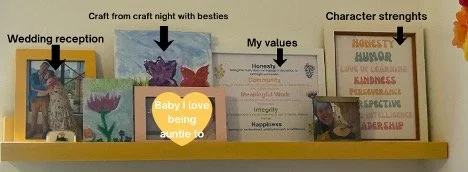
My workspace includes visual reminders of happy memories, people I love, and my VIA character strengths and values.
I also keep visible reminders of commitments I have made, such as my monthly calendar and my themed days. If you are curious about themed days and how they reduce mental load and decision fatigue, you can check out my free guide, “8 ADHD Strategies That Helped Me Survive the 9-5.”
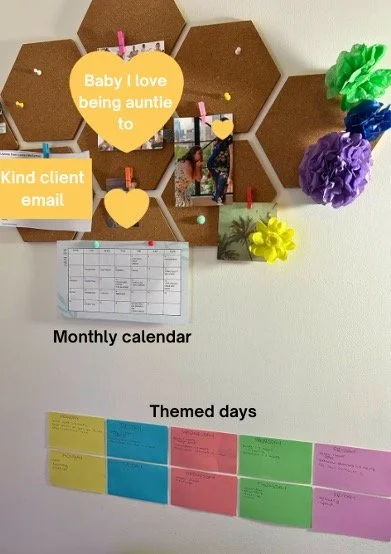
In addition to happy memories and kind words, I have visual reminders of commitments I’ve made such as my monthly calendar and themed days.
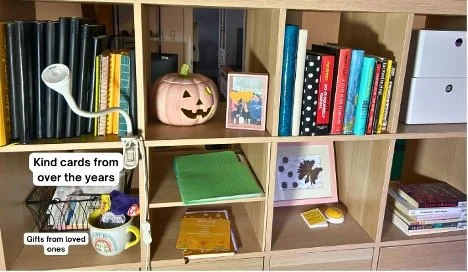
The visual reminders of happy memories and kind words help me to stay in the positive.